
Getting started with Bitcoin mining at home
You want to mine Bitcoin at home but do not know where to start? This guide gathers the essentials, in order, and points you to the detailed guides at each step. No need to be an engineer: I am not one either.
Published 11 October 2026, updated 17 October 2026 · by Pixel · 3 min read
 7:02
Contents 7 parts · 3 min read
1. Mining in two minutes
Roughly every ten minutes, the Bitcoin network holds a draw. Machines all over the world look for a hash A 64-character code computed from the block. Impossible to predict: you have to try. that starts with enough zeros; the first to find it writes the next block and wins the jackpot: 3.125 new bitcoin, plus the fees of the block’s transactions.
Every attempt has the same small chance. The more attempts per second your machine makes, the more tickets you play in each draw. The details: mining difficulty explained.
2. What you need
- A machine: a Bitaxe to start, about 1.2 TH/s for 15 to 18 W. Which miner to choose?
- A Bitcoin address of your own, created by your own wallet, not an exchange’s. Which wallet to choose?
- 2.4 GHz Wi-Fi: the Bitaxe does not do 5 GHz.
- A pool A server that machines connect to. A regular pool shares the earnings, a solo pool does not. Solo or pool?, the server your machine sends its work to.
3. What it costs, what it earns
A Bitaxe draws about as much as a light bulb: at €0.20 per kWh, roughly €2.60 of electricity a month for 18 W.
On the other side, honestly: solo at 1.2 TH/s, that is about 1 chance in 16,000 per year of finding a block (network as of 17 October 2026). In a pool, a Bitaxe would earn a few dozen sats a day. It is not an investment, it is a lottery and a way to understand Bitcoin from the inside. The full math: How much does a Bitaxe earn?
4. Solo or pool?
On average both pay the same; what changes is how the money arrives. A regular pool pays small amounts regularly. Solo pays nothing most of the time, then the whole block if your machine finds it. Solo or pool: which one?
To mine solo without installing anything, my pool FindMyBlock is free and non-custodial Said of a service that never holds your bitcoin: the reward goes straight to your address.: the reward goes straight to your address.
5. The five steps to start
- Choose the machine for your budget, the noise you accept and the room. My measured reviews
- Get your Bitcoin address ready in your wallet.
- Plug the machine in and connect it to 2.4 GHz Wi-Fi. Set up a Bitaxe
- Set the pool: server address, port, your Bitcoin address as the user name, and x as the password. The FindMyBlock settings
- Follow your machine: on findmyblock.xyz, type your address to see your hashrate Computing power: the number of attempts per second of a machine or of the whole network. The higher it is, the more tickets you play in each draw. and best shares An attempt good enough to be counted by the pool. It proves your machine is working, even if it is not enough to find a block..
6. Traps to avoid
- The test address: some machines ship preset with an address that is not yours. Check before mining.
- An extra space before or after your Bitcoin address, and nothing goes out.
- TLS: if the machine runs but sends no shares, turn it off, many pools do not support it.
- Wi-Fi: 2.4 GHz only, and not too far from the router. Bitaxe and Wi-Fi
- Heat: a machine that runs hot loses hashrate. Miner running hot
- Fake miners: an ESP32 A microcontroller worth a few euros, the kind in smart plugs. It can compute SHA-256, but millions of times slower than an ASIC chip: an ESP32 miner has no real chance. The lottery miner trap “lottery miner” has no real chance of finding a block. How to spot them
- Mistakes with your bitcoin: recovery phrase The 12 or 24 words a wallet gives you when it is created: they rebuild your keys on another device. Whoever has them has your bitcoin: never give them to anyone. 5 mistakes to avoid, exchanges, fees, scams. 5 mistakes to avoid
7. Going further
Once your first machine is running: your own node and pool with Umbrel, renting out your machine on MiningRigRentals, or updating AxeOS. And for the words that keep coming up: the glossary.
A question about this guide? Ask it on the Discord, several of us answer there.
Other guides
-
 Set up a Bitaxe, step by step
From unboxing to the first share sent to the pool.
2 min read · published 23 Sept 2026
-
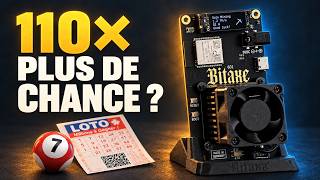 Solo mining on FindMyBlock
Understand solo mining, set up your machine and follow your odds.
2 min read · published 23 Sept 2026
-
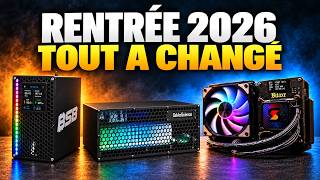 Which miner for home mining?
Hashrate, electricity, noise: the criteria that really matter.
2 min read · published 23 Sept 2026
-
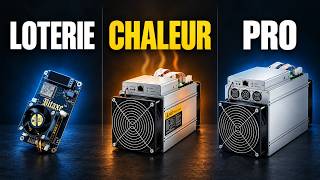 How much does a Bitaxe earn?
The honest math: average earnings, electricity and jackpot odds.
2 min read · updated 17 Oct 2026