
How much does a Bitaxe earn?
Short answer: on average, a Bitaxe earns a little less than the electricity it uses. But the average is not the whole story. Here is the math, step by step, with network figures from 23 September 2026.
Published 23 September 2026 · by Pixel
VideoThe topic on video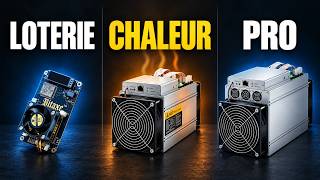 Is home mining still worth it in 2026?On YouTube, in French with subtitles
1. The math, step by step
1.2 TH/s922 EH/sabout 1 in 770 million144 blocks × 3.156 BTC ≈ 454 BTCabout 59 satsabout 21,600 sats, roughly €16A “sat” (satoshi) is the smallest unit of bitcoin: one hundred-millionth. The math uses 1 bitcoin at €74,100.
2. What about electricity?
A Bitaxe draws about 15 W, day and night: about 131 kWh a year, roughly €26 at €0.20 per kWh. On average it costs a little more than it earns: about €10 a year. To break even, bitcoin would need to be around €120,000, at the same network hashrate.
Two things change the math. If the miner’s heat replaces some heating in winter, that energy is not wasted. And if the network hashrate grows, your share shrinks accordingly.
3. Solo: the average never lands
Solo, you do not receive those 59 sats a day. You receive the whole block, over 3 bitcoin (over €230,000), the day your machine finds it, and nothing on other days. With a Bitaxe the odds are about 1 in 14,600 per year. It is a lottery, which is why this whole site is a ticket.
The calculator on the home page redoes this math live for your machine, and the guide Solo or pool: which one? explains why both pay the same on average.
4. What about other machines?
About €64 of average earnings a year, for about €140 of electricity.
About €54 of average earnings a year, for about €245 of electricity. Its heat does warm the room, though.
About €2,700 of average earnings a year, for about €6,100 of electricity.
At French household electricity prices, none of these machines is profitable on average right now. Large farms mine with far cheaper electricity.
5. So why mine?
My reasons, for what they are worth:
- Understanding Bitcoin by running it at home, far better than reading about it.
- Taking part: every small miner makes mining a little less concentrated in a few big farms.
- The thrill of the ticket: a tiny but real chance of winning a whole block.
- The heat, put to use in winter.
Figures as of 23 September 2026: they move with the network hashrate and the bitcoin price. This is not investment advice.
Other guides
- Solo or pool: which one?Same average earnings, two very different ways to receive them.
- Bitaxe will not connect to Wi-Fi: the fixesThe most common causes, to check in order.
- Why you almost never find a block: mining difficulty explainedThe zeros, the target, and why the network adjusts itself every two weeks.
- Miner running hot: cleaning, thermal paste and coolingSpot overheating, fix it, and gain some hashrate along the way.