
Solo mining: two home miners each win a Bitcoin block within 24 hours ($250,000 each)
Monday 26 October, 17:06 UTC: a solo miner lands a Bitcoin block with a desktop machine. Tuesday, 15:11 UTC: a second one, on another pool. Two jackpots of about $250,000 within 22 hours, against industrial farms. The blocks checked on the blockchain, the real odds, and what to know before you try your own luck.
Published 31 October 2026 · by Pixel · 5 min read
LIVE 1 person reading this article
Share this live X WhatsApp Telegram
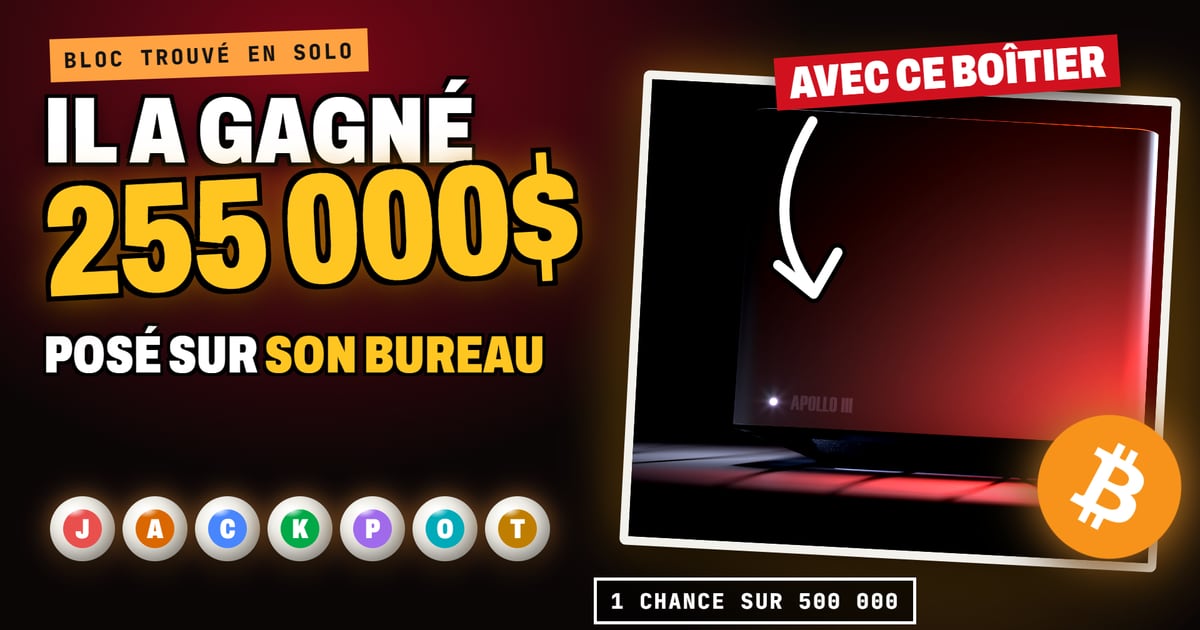
On Monday 26 October 2026, Bitcoin block 973,262 was found by the solo pool built into FutureBit machines, with a message signed “Wilson” inside the block. The next day, 22 hours later, a second independent miner found block 973,413 on Solo CKPool, with about 16.2 TH/s according to Bitcoin.com News. Each kept the whole reward, more than 3.1 BTC, or about $250,000 at the time. Here is what happened, why it is so rare, and how to take your own chance from home.
Contents 6 parts and a FAQ · 5 min read
1. What is solo mining?
In 2026, mining Bitcoin is mostly a business of huge industrial farms: warehouses full of thousands of machines. So most small miners join a pool A server that machines connect to. A regular pool shares the earnings, a solo pool does not. Solo or pool?, a cooperative: they add up their hashrate Computing power: the number of attempts per second of a machine or of the whole network. The higher it is, the more tickets you play in each draw. and share An attempt good enough to be counted by the pool. It proves your machine is working, even if it is not enough to find a block. every reward, which gives a steady but tiny income.
Solo mining is the opposite: you mine for yourself alone. If your machine finds the right number, you keep the whole block reward. If it does not, you get nothing. It is literally a lottery, with a draw every 10 minutes on average. Everything is explained in the solo mining guide, and how it compares with a regular pool in Solo or pool?
2. Block 973,262: “Wilson” and FutureBit’s solo pool
On Monday 26 October 2026 at 17:06 UTC, block 973,262 was confirmed. mempool.space credits it to “FutureBit Apollo Solo”, and the transaction that pays the reward carries the message “FutureBit-Solo Apollo Run by Wilson”: that is where the nickname “Wilson” comes from.
3.125 BTC subsidy + 0.029 BTC in fees = 3.154 BTCabout $252,700 (€226,000) at the price of that hour2,477the solo pool built into FutureBit machinesThe exact machine is not known. According to Bitcoin Magazine, FutureBit says the block was prepared, served and submitted to the network by the solo pool built into its machines: an Apollo (BTC, II or III) or a Solo Node A computer that keeps a full copy of Bitcoin and checks every block itself. Run your own node, quiet boxes that also run a full Bitcoin node. The Apollo III is rated up to 18 TH/s in turbo mode. It is the fourth block found this way, after blocks 867,760 (October 2024), 881,423 (January 2025) and 888,737 (March 2025).
FutureBit celebrated on X: “Gradually, then suddenly. We (the people) hit a Bitcoin block today.” A block found by people, not by an industrial farm.
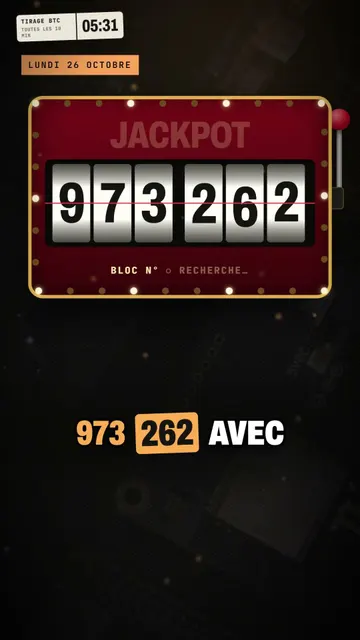
3. The next day: a second solo block on CKPool
On Tuesday 27 October at 15:11 UTC, 22 hours after the first one, block 973,413 landed on Solo CKPool, the oldest solo pool. The reward transaction shows it: 98% to the miner, 2% to the pool.
3.125 BTC subsidy + 0.015 BTC in fees = 3.140 BTC3.077 BTC, about $247,000 (€221,500)about 16.2 TH/sabout 1 in 431,000 (0.0002%)The 16.2 TH/s figure comes from Bitcoin.com News: the blockchain shows who was paid, not how much hashrate they had. That is a handful of small home miners. With that hashrate and that day’s difficulty How many attempts it takes on average to find a block. It adjusts itself about every two weeks. Difficulty explained, finding a block takes close to 1,200 years on average. This miner did it on a Tuesday afternoon.
Two solo blocks less than a day apart is a rare double: over the past year, solo pools found only about two blocks a month.
4. Why it is so rare
Over the last twelve months, the main solo pools identified by mempool.space (Solo CK, Public Pool, Braiins Solo, SoloPool.com, Noderunners) found 24 blocks out of 52,365, about 1 block in 2,200 (as of 31 October 2026), not counting a few blocks like FutureBit’s. The list, updated every day, is on solo blocks found.
The Bitcoin network produces a block every 10 minutes on average, and every time, all the machines in the world compete for the same ticket. At the end of October 2026 the network ran at around 1,100 EH/s: about 70 million times the CKPool miner’s hashrate. Against industrial farms, a home miner’s chance is tiny, but not zero, and every draw starts from scratch: a machine builds up nothing and can win on its very first night. Where these numbers come from: mining difficulty explained.
5. The “tech lottery”: taking your chance from home
A small solo miner, such as a Bitaxe, a NerdQAxe or a FutureBit Apollo:
- heats your room: the electricity it uses is not lost, it becomes heat;
- secures the Bitcoin network: every independent machine adds to decentralisation;
- gives you a ticket for every block, every 10 minutes, for a prize of about $250,000.
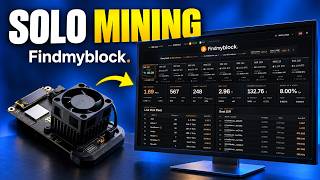
To be honest: with a Bitaxe Gamma, it is about a 1 in 16,800 chance a year (network as of 30 October 2026), and most small machines will never find a block. You mine for the heat, for the network, and for the ticket. The solo mining calculator gives the odds of your own machine, and Which Bitaxe to buy? helps you get started. For the pool, Best solo mining pool compares the options, including mine, FindMyBlock, with no fee.
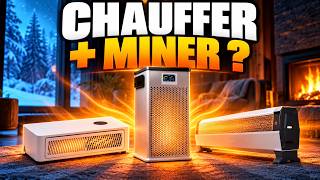
Your heater could earn you bitcoin: I explain everything in the full video (in French), and in writing in Heat your home mining Bitcoin.
6. What if your miner finds a block?
Before sending everything to an exchange, watch out for the traps: the reward stays locked for 100 blocks (about 16 hours), it lands on the address you gave the pool, an exchange will run KYC and anti-money-laundering checks on such a sum, and the tax office sees it as income. It is all covered in my video on finding a block (in French) and in the guide Found a block solo: what next?
Frequently asked questions
Can you really win a Bitcoin block with a home miner?
Yes, it is rare but possible. On 26 October 2026, block 973,262 was found by the solo pool built into FutureBit machines (Apollo or Solo Node), and the next day block 973,413 was found on Solo CKPool, with about 16.2 TH/s according to Bitcoin.com News.
How much is a Bitcoin block worth in 2026?
The subsidy is 3.125 BTC, plus transaction fees (about 0.03 BTC for block 973,262), so about $252,000 or €226,000 at the end of October 2026. The value follows the bitcoin price, and a solo pool may take a cut: 2% on Solo CKPool.
What are the odds of finding a block solo?
With 16.2 TH/s, about 1 in 431,000 per day at the end of October 2026, or one block every 1,200 years on average. With a Bitaxe Gamma (1.2 TH/s), about 1 in 16,800 per year. The more hashrate, the better the odds, in exact proportion.
Which miner should you choose for solo mining?
The most popular are the Bitaxe, the NerdQAxe, the Avalon Nano 3S and the FutureBit Apollo: quiet, low-power, and made for solo mining from home.
Is solo mining profitable?
No, not as a steady income: it is a lottery. On average, a machine earns the same solo as in a pool, but solo it all comes at once, or never. Its appeal: the heat you reuse, taking part in the network, and a shot at the jackpot.
Sources
- mempool.space, block 973,262 and its “Run by Wilson” message
- mempool.space, block 973,413 (Solo CKPool, 98% to the miner)
- mempool.space, the four blocks of the FutureBit Apollo solo pool
- Bitcoin Magazine, the FutureBit block and FutureBit’s reaction
- Bitcoin.com News, the two solo blocks and the 16.2 TH/s
- Solo CKPool, the solo pool and its 2% fee
A question about this article? Ask it on the Discord, several of us answer there.
Go further
-
 Found a block solo: what happens next, all the way to taxes
The 100-block wait, the right address, the paperwork for the exchange and French taxes: get it all ready before it happens.
7 min read · updated 30 Oct 2026 · new
-
 Bitcoin solo mining: the complete guide
Your real odds, the small miners who won, the pool and the settings.
11 min read · updated 30 Oct 2026 · new
-
 Best solo mining pool: Bitcoin and Bitcoin Cash pools compared
Fees, payout and servers of Bitcoin and Bitcoin Cash solo pools, checked and dated.
13 min read · updated 30 Oct 2026 · new
-
 Heating your home by mining Bitcoin: the real math
A miner heats like an electric heater: the real math, machine by machine.
14 min read · updated 30 Oct 2026 · new